
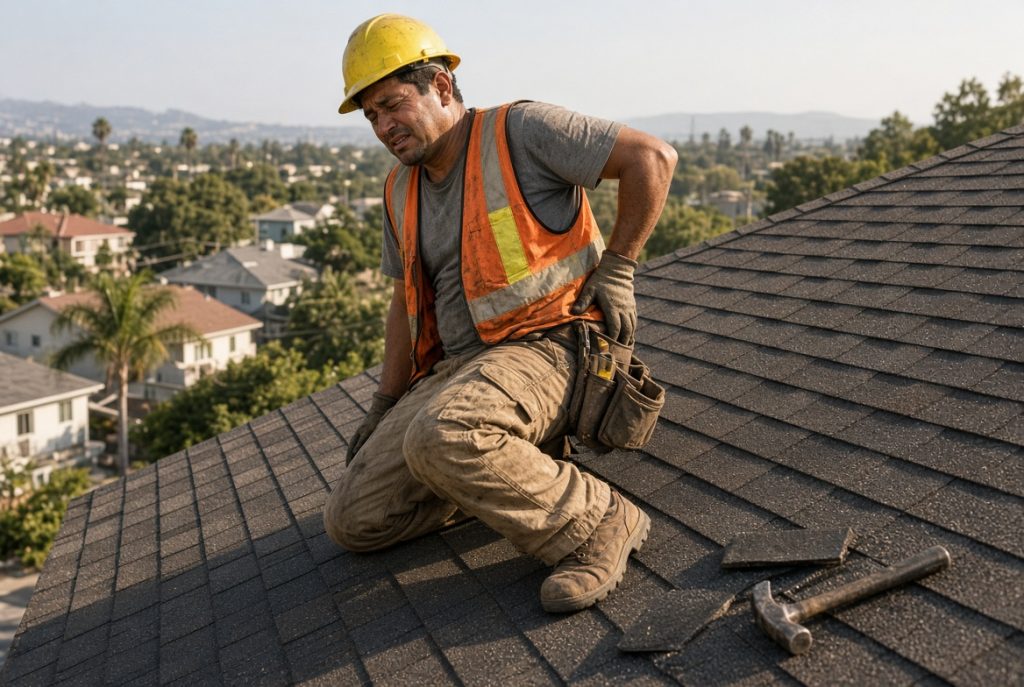
If you work as a roofer in California and get hurt on the job, workers’ compensation can cover your medical care, a portion of your lost wages, and other benefits without you having to prove anyone was at fault. Falls, heat illness, strains from heavy lifting, and other common roofing injuries often qualify, as long as the injury happened while you were performing your work duties. Reporting the injury quickly and filing the right paperwork protects your rights, and speaking with an experienced workers’ compensation attorney can help you avoid delays or denials. Laguna Law Firm helps injured roofers across Orange County and Southern California navigate these claims.
Roofing ranks among the most dangerous trades in construction. Day after day, workers climb ladders, balance on steep slopes, tear off old materials, and install new ones while dealing with California’s intense sun, wind, and occasional rain. The physical demands are relentless. One misstep, a sudden shift in the decking, or a moment of heat exhaustion can change everything in an instant. When that happens, the California workers’ compensation system exists to provide support so you can focus on healing instead of worrying about how to pay the bills.
Why Roofing Work Carries Such High Risk
Roofers spend long hours at heights. Cal/OSHA requires fall protection on many roofing jobs once the fall distance reaches six feet on lower-sloped roofs, and the rules tighten further on steeper pitches. Yet gaps in training, missing harnesses, unguarded edges, or pressure to finish jobs quickly still lead to serious accidents. Recent Cal/OSHA citations against Los Angeles County roofing contractors after a fatal fall highlight how often basic protections get skipped.
Heat adds another layer of danger, especially in Southern California summers. Roof surfaces can bake under direct sun, raising body temperature fast. Heat exhaustion or heat stroke can cause dizziness and confusion, which then increase the chance of a fall. Rotten or weakened decking during tear-off work creates sudden openings that workers can fall through. Heavy bundles of shingles, repeated lifting, awkward postures, and the constant use of tools like nail guns or tear-off equipment contribute to cumulative trauma injuries that build over months or years.
Electrical hazards near power lines, burns from hot asphalt or torch-down materials, and slips on wet or dusty surfaces round out the list of everyday risks. These are not rare events. They are the predictable result of the work itself.
Common Roofing Injuries That Lead to Claims
Falls from roofs or ladders produce some of the most severe injuries: broken bones, spinal injuries, traumatic brain injuries, and internal damage. Even a fall from a single-story height can leave a worker with lasting limitations. Back, neck, and shoulder strains from lifting and carrying materials are extremely common and often develop into chronic pain. Knee and ankle injuries from working on uneven surfaces or climbing ladders also appear frequently.
Heat-related illnesses can range from mild heat exhaustion to life-threatening heat stroke. Cumulative trauma claims, such as those involving the lower back, wrists, or shoulders from years of repetitive motion, continue to rise across California. Nail-gun injuries, lacerations, and chemical exposures from roofing materials complete the picture. Any of these can support a valid workers’ compensation claim if the injury arose out of and in the course of employment.
How Workers’ Compensation Works for Roofers in California
California’s system is no-fault. You do not need to show that your employer was careless. The key is proving the injury is work-related. Most roofing contractors must carry workers’ compensation coverage under class code 5552, and C-39 license holders are required to maintain coverage even if they have no employees. If your employer failed to carry insurance, claims can still be filed through the state’s Uninsured Employers Benefits Trust Fund.
The process usually starts with reporting the injury to your employer. California law requires written notice within 30 days, though reporting the same day is always smarter. Your employer should give you a DWC-1 claim form. Completing and returning that form begins the formal claim. The claims administrator then has 90 days to accept or deny the claim. During that investigation period, limited medical treatment is often available.
Medical care under workers’ compensation is intended to be comprehensive: doctor visits, hospital stays, surgery, physical therapy, medications, and necessary equipment. Temporary disability benefits replace roughly two-thirds of your average weekly wages while you are unable to work, subject to state maximums. If the injury leaves permanent limitations, permanent disability benefits may apply based on the doctor’s impairment rating. When you cannot return to roofing, supplemental job displacement benefits can help with retraining or education. In the worst cases, death benefits support surviving family members.
Deadlines matter. The one-year period to file a formal Application for Adjudication of Claim generally runs from the date of injury, or in some cumulative trauma cases from the date you knew or should have known the condition was work-related. Missing these windows can jeopardize benefits, so early action is important.
Challenges Injured Roofers Often Face
Insurance companies sometimes question whether a worker was properly classified as an employee or an independent contractor. Misclassification remains a frequent issue in construction. They may also argue that an injury was pre-existing, that the worker failed to report on time, or that the condition is not as severe as claimed. Heat-related claims can draw extra scrutiny if documentation of symptoms is thin. Cumulative trauma cases often require detailed medical records and a clear work history to connect the dots.
Employers occasionally pressure workers to return before they are ready or to use regular health insurance instead of workers’ compensation. Safety violations, such as missing fall protection, can sometimes support additional remedies under Labor Code provisions for serious and willful misconduct, which may increase certain benefits. These situations benefit from careful documentation: photos of the worksite, names of witnesses, medical records, and a clear timeline of what happened.
What You Can Do After a Roofing Injury
Seek medical attention right away, even if the injury seems minor at first. Tell the doctor exactly how the injury occurred at work. Report the incident to your supervisor in writing and keep a copy. Request the DWC-1 form and file it promptly. Keep notes of every conversation, medical visit, and time lost from work. Avoid giving recorded statements to the insurance company without understanding your rights.
If the claim is delayed, denied, or the benefits offered feel inadequate, an attorney who focuses on California workers’ compensation can step in. Lawyers in this field understand how claims administrators evaluate roofing cases, how to challenge low permanent disability ratings, and how to push for necessary medical treatment. They can also identify whether a third-party claim against a property owner, equipment manufacturer, or another contractor might exist alongside the workers’ compensation case.
How Laguna Law Firm Helps Injured Roofers
At Laguna Law Firm we work with injured workers throughout the Laguna Beach, Orange County, and broader Southern California area. We understand the physical and financial pressure that follows a roofing injury. Our approach is straightforward: we listen to what happened, explain your options in plain language, and handle the paperwork and negotiations so you can concentrate on recovery. Whether the injury involves a fall, heat illness, a back strain that developed over time, or something else, we help clients pursue the full range of available benefits.
You do not have to navigate the system alone. Many roofers feel pressure to keep working through pain or worry about losing their job. California law protects workers from retaliation for filing a legitimate workers’ compensation claim. Getting clear advice early often makes the difference between a smooth recovery and months of frustration.
If you or someone you know has been hurt while working on a roof, reach out. Call Laguna Law Firm at (949) 930-1386 or visit lagunalawfirm.com to schedule a conversation about your situation. The consultation is an opportunity to understand your rights and decide the next steps that make sense for you.
Roofing keeps California’s homes and buildings protected from the elements. The workers who do that work deserve the same protection when an injury occurs. Workers’ compensation is the safety net the law provides. Knowing how to use it, and having the right support when obstacles appear, helps ensure that one bad day on a roof does not define the rest of your working life.
Suggested image file name: roofing-injuries-workers-compensation-california-roofer.jpg
Alt tag: Photorealistic image of a middle-aged male roofer in work clothes and safety vest kneeling on a steep residential asphalt shingle roof under bright California sunlight, holding his lower back with one hand after a strain, with tools and materials nearby, natural lighting and authentic detail illustrating common roofing workplace injuries eligible for workers compensation benefits.