
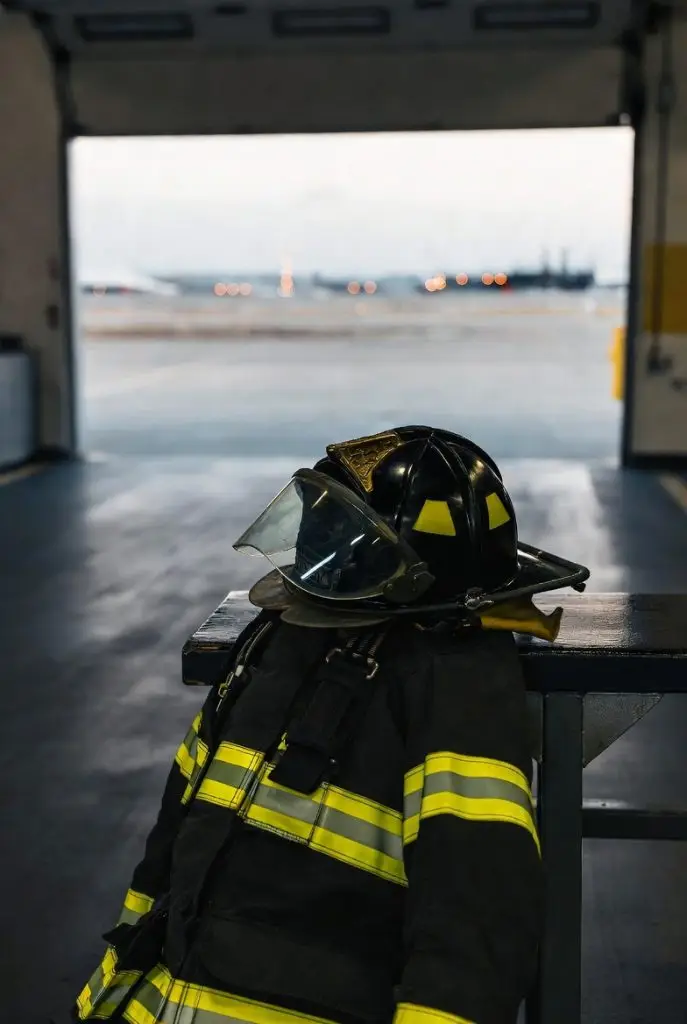
If you’re an airport firefighter in California, you already know the unique pressures of the job. Whether you’re stationed at John Wayne Airport in Orange County, LAX, SFO, or any FAA-regulated commercial hub, your shifts involve everything from massive jet-fuel fires and aircraft rescue operations to medical emergencies in crowded terminals. You train to the highest standards—Fire Control 5, FAA Part 139 requirements—and you show up ready to protect lives every single day.
But those same duties come with hidden costs. Years of exposure to toxic smoke, chemicals, diesel exhaust, and repeated traumatic events can lead to serious health issues like cancer or post-traumatic stress disorder (PTSD). Until now, airport firefighters often faced an uphill battle proving these conditions were work-related when filing workers’ compensation claims.
That changes in 2026.
Thanks to Senate Bill 230 (SB 230), signed into law in October 2025 and effective for injuries occurring on or after January 1, 2026, airport firefighters now receive the same powerful rebuttable presumptions for PTSD and cancer that municipal and county firefighters have long enjoyed. This is huge news for first responders who protect California’s skies.
At Laguna Law Firm, we’ve been fighting for injured workers across Southern California for years, and we’re excited to see this long-overdue protection finally extended to airport crews. In this post, we’ll walk you through exactly what the new law means, how these presumptions work in practice, and why partnering with an experienced California workers’ compensation attorney can help you secure the benefits you’ve earned.
Why Airport Firefighters Needed This Expansion
Airport firefighting isn’t like fighting structure fires in a quiet neighborhood. You deal with aviation fuel that burns hotter and faster, hazardous materials from cargo planes, and the constant stress of knowing one delayed response could affect hundreds of passengers. Jet fuel, foam concentrates, aircraft composites, and even the diesel from ARFF vehicles create a toxic soup of carcinogens. On the mental-health side, you witness plane incidents, passenger distress calls, and high-stakes rescues that most civilians never see.
Before SB 230, many airport firefighters were left out of Labor Code sections 3212.1 (cancer) and 3212.15 (PTSD). You had to prove, often with expensive expert testimony and months of delays, that your diagnosis came directly from the job. Claims got denied or dragged out, leaving families in financial limbo while medical bills piled up.
SB 230 fixes that by adding “active firefighting members of a fire department that provides fire protection to a commercial airport regulated by the Federal Aviation Administration (FAA) under Part 139” to the list of covered workers—provided you meet the State Fire Marshal’s training and certification standards (Fire Control 5 and FAA Section 139.319). It also extends similar protections to certain DoD and NASA installation firefighters.
The result? The burden of proof shifts. The law now presumes your PTSD or cancer is work-related, making approval faster and denials much harder for insurance carriers to justify.
Understanding Rebuttable Presumptions in California Workers’ Compensation
Let’s make this simple. In California workers’ comp, a “rebuttable presumption” is a legal shortcut that says: “If you’re a qualifying worker and you develop this condition while on the job (or within the allowed window after), we’ll assume it’s work-related—unless the employer proves otherwise with clear evidence.”
It doesn’t mean automatic approval forever. Carriers can still try to rebut it (usually by arguing non-industrial causes or pre-existing conditions). But the presumption gives you a massive advantage. You don’t start from zero; the law starts you ahead.
For airport firefighters, this change aligns you with the protections already in place for city and county firefighters under Labor Code sections 3212, 3212.1, 3212.15, 3212.6, and others. It covers:
- Cancer (including leukemia)
- PTSD and other mental-health disorders
- Heart trouble, hernia, pneumonia, tuberculosis, and more
The presumption applies during your active service and often extends afterward—typically three months of coverage for each full year of service (up to 60 months max for PTSD in many cases).
The PTSD Presumption: Finally Recognizing the Mental Toll
PTSD has always been one of the toughest claims for first responders. Symptoms like flashbacks, hypervigilance, sleep issues, or emotional numbness don’t always show up immediately after a single event. They build from years of cumulative trauma—responding to crashes, delivering bad news to families, or managing chaotic mass-casualty scenes at the airport.
Under the new law (Labor Code § 3212.15), if you’re diagnosed with PTSD according to the current DSM (Diagnostic and Statistical Manual of Mental Disorders), and it develops or manifests during your service or within the post-service window, it is presumed to arise out of and in the course of your employment.
What this means for you practically:
- Faster access to mental-health treatment through workers’ comp.
- Temporary disability benefits so you can focus on recovery without losing your paycheck right away.
- Potential for permanent disability benefits if symptoms affect your ability to return to full duty.
- Less fighting with claims adjusters who used to demand proof that “it wasn’t the job.”
Studies show firefighters experience PTSD at rates far higher than the general population—around 20% meet criteria at some point in their careers. Yet before presumptions, denial rates for first-responder PTSD claims hovered around 24%, more than twice the denial rate for physical presumption claims like cancer or heart issues.
SB 230 levels that playing field. If you’re an airport firefighter struggling with the invisible injuries of the job, 2026 just made it significantly easier to get help without the added stress of proving causation.
The Cancer Presumption: Protecting the Heroes Who Face Toxic Exposure Daily
Cancer is the number-one cause of line-of-duty death for firefighters nationwide. The International Agency for Research on Cancer (IARC) classifies occupational exposure as a firefighter as “carcinogenic to humans” (Group 1)—the same category as asbestos or tobacco. California firefighters face a 9% higher risk of cancer diagnosis and 14% higher risk of dying from it compared to the general public.
Airport crews face extra risks: aviation fuel, PFAS in firefighting foam, aircraft materials that release toxins when burned, and diesel exhaust from ARFF vehicles. SB 230 brings airport firefighters squarely under Labor Code § 3212.1.
Key benefits of the cancer presumption:
- Any cancer that develops or manifests during service (or within the statutory period afterward) is presumed job-related.
- You gain immediate access to medical treatment, including specialist care, surgery, chemotherapy, and follow-up monitoring.
- Temporary disability payments (up to two-thirds of your average weekly earnings, tax-free) while you recover.
- Lifetime medical care for the industrial cancer if the claim is accepted.
- Potential for 4850 benefits—full salary for up to one year if you’re a safety employee unable to work.
This isn’t just paperwork. It’s peace of mind knowing that if you receive a cancer diagnosis after years of protecting California airports, the system will finally presume the job caused it instead of forcing you to fight uphill.
How the New Law Works in Real Life: A Hypothetical Scenario
Picture this: A veteran firefighter at John Wayne Airport develops aggressive bladder cancer after 18 years on the job. Before 2026, the carrier might deny the claim, arguing it could be from smoking, family history, or “unknown causes,” forcing expensive litigation.
After January 1, 2026? The presumption kicks in. The claim starts as accepted unless the employer proves, with substantial evidence, that the cancer wasn’t work-related. Treatment begins right away. Bills get paid. The firefighter can focus on beating the disease instead of battling bureaucracy.
The same goes for a younger crew member experiencing severe PTSD after multiple aircraft incidents. No more months of delays while the adjuster hunts for “personal stressors.” The law now says the job is the primary cause unless proven otherwise.
Common Challenges Even With Presumptions—and Why You Still Need Strong Representation
Presumptions are powerful, but they’re not ironclad. Carriers still look for ways to rebut them. They might argue:
- The condition existed before your airport service.
- Non-work factors (like off-duty stress or lifestyle) were the “predominant cause.”
- You didn’t meet the exact training/certification requirements (though most professional airport crews do).
Timing matters too. You must file within the statutory deadlines, and medical reporting has to clearly support the presumption.
That’s where an experienced workers’ compensation lawyer becomes your biggest ally. At Laguna Law Firm, we’ve helped countless first responders—firefighters, law enforcement, and public safety professionals—navigate these exact battles. We know how to:
- Gather the right medical evidence and expert opinions.
- Push back against improper denials or delays.
- Maximize your benefits, including 4850 pay, permanent disability, and future medical care.
- Handle appeals if a presumption gets challenged.
We serve injured workers throughout Southern California, including those protecting Orange County’s airports and beyond. Our team fights aggressively but compassionately because we understand what’s at stake—your health, your family’s security, and the career you’ve dedicated your life to.
What Airport Firefighters Should Do Now
If you’re currently experiencing symptoms of PTSD, have received a cancer diagnosis, or are worried about future claims, don’t wait. Document everything. See your doctor. Talk to your union rep. And reach out to a workers’ compensation attorney who understands the new 2026 rules.
Even if your injury happened before January 1, 2026, some protections may still apply—especially if you’re still within the post-service window. But the expanded presumptions give the strongest advantage to claims arising on or after that date.
Protecting the Protectors: Why This Matters
California’s airports are safer because of the men and women who train, respond, and sacrifice every day. SB 230 is more than a legal tweak—it’s recognition that your service carries real, measurable risks. It’s a promise that when the job takes its toll, the system will support you instead of doubting you.
At Laguna Law Firm, we’re proud to stand with California’s first responders. If you or a loved one is an airport firefighter dealing with a work-related injury, illness, or claim denial, we’re here to help. Our consultations are free and confidential, and we work on a contingency basis—you pay nothing unless we win benefits for you.
Llámenos hoy mismo al (949) 930-1386 o visite lagunalawfirm.com to schedule your free case review. We serve clients from Mission Viejo, Laguna Beach, Orange County, and across California. Don’t face the claims process alone—let us fight for the benefits you deserve under the new 2026 law.
Your service protects thousands every day. Now let us protect your future.