
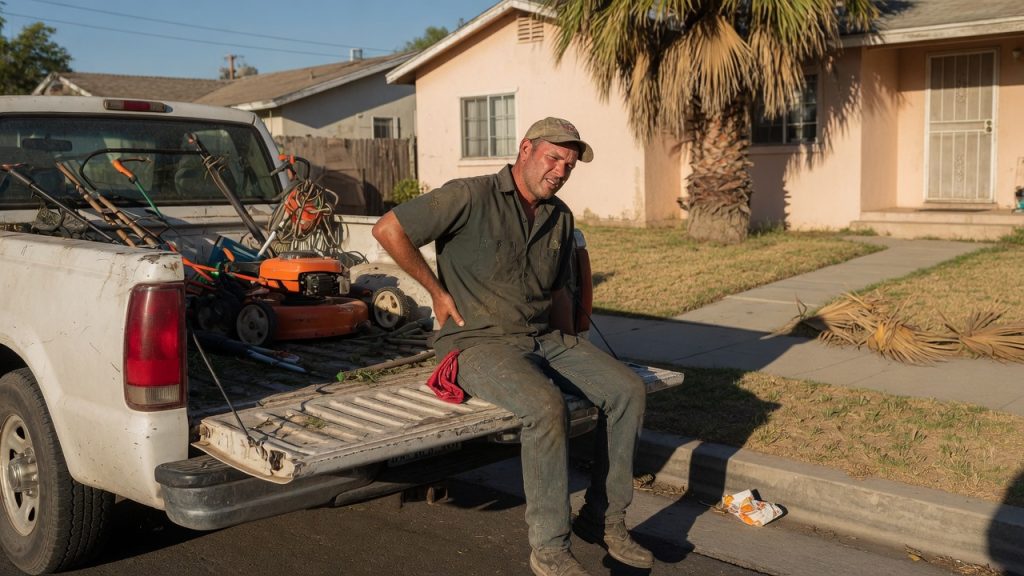
Yes. If you got hurt doing landscaping or gardening work in California, you can usually receive workers’ compensation when you are an employee. That includes medical care and a portion of your lost wages, even if the lift, the slip, or the bad step was an accident. Crew members, irrigation techs, mower operators, and a lot of people paid by the day are covered if the company controls the work. You do not have to prove the owner was careless. You do have to report the injury, get medical care, and file the claim on time. A 1099, a cash envelope, or the sentence “you are your own boss” does not automatically end the claim.
A back that starts barking on a Thursday route can be a real claim. So can the ankle that folds on a wet slope at 7 a.m.
Laguna Law Firm has spent more than 20 years helping injured workers across California. For a straight answer, call (949) 930-1386 or visit lagunalawfirm.com. The consultation is free.
The short version of how this works
California’s workers’ compensation system is no-fault. The insurance company is supposed to pay for a work injury without a courtroom fight over who left the rake in the walkway. In exchange, you generally cannot sue your employer for pain and suffering the way you might after a car crash.
You can be hurt in one ugly moment. A mower kicks a rock. A branch comes down wrong. A truck rolls a few feet on a hill. You can also be hurt slowly. California treats both as work injuries. A shoulder worn out by years of blowers and hedges is still a work injury. So is hearing loss from equipment that never got quiet. Those slower injuries are called cumulative trauma, and they show up constantly on landscape crews.
Coverage generally starts day one for employees. It does not matter if you are seasonal, paid by the yard, or “just helping through the busy months.”
Who is actually covered?
Crews on a company truck. If you ride in the owner’s truck, use the owner’s mowers, and hit the route the owner set, you look like an employee. W-2 status makes it simple. The claim still exists when the paperwork is sloppier than that.
Maintenance gardeners. Mowing, edging, blowing, and weeding for a route is still work. A lot of maintenance gardeners do not need a contractor’s license for ordinary upkeep. License rules and workers’ compensation rules are not the same question. If you have employees, you need coverage for them. If you are the employee, you may have a claim even when the boss never framed a license on the wall.
Installation and irrigation techs. People who trench, plant, and set sprinklers get hurt like construction workers and get paid like yard workers. The injury is still a work injury if you are an employee. The Contractors State License Board generally requires a C-27 landscaping license when combined labor and materials reach $1,000 or more. Assembly Bill 2622 raised that line from $500 effective January 1, 2025. Routine mowing is often outside the license. New installation usually is not. The license issue matters because of what comes next.
1099s and day labor. Labor Code section 2750.5 can treat a worker who does work that requires a contractor’s license, without holding that license, as an employee of the person who hired them. It is a presumption with edges, not a slogan. Bring who set the hours, who supplied the tools, and whether you could send someone else. A tax form does not answer that by itself. Our misclassification article covers the bigger picture.
Labor contractors and two bosses. Some crews are hired by a landscape company and some are sent by a labor contractor. In California that can create dual employment. Do not assume you have no claim because the cash came from a different name than the logo on the shirt.
Tree work. Climbing and removals injure people in ways a mower route does not. Heights change the medical story. They do not change the basic rule: an employee hurt on the job can have a claim. If you were told to climb and nobody on that crew holds the right license, say that on the first call.
Undocumented workers. California workers’ compensation does not require U.S. citizenship. If you were working and you got hurt, you can still have a claim.
What kinds of landscaping injuries actually qualify?
Almost any injury that arises out of the job and happens in the course of the job. In yard English, that means:
- Back, shoulder, and knee injuries from mowers, trimmers, bags of soil, and repetitive overhead work
- Ankle and wrist injuries from slopes, holes, and tools that kick
- Cuts from blades, shears, and glass hidden in a hedge
- Eye injuries from debris
- Hearing loss from blowers, mowers, and saws
- Heat illness on a route that starts early and still cooks by noon
- Chemical and pesticide exposure
- Vehicle injuries between yards, including falls off a trailer
- Dog bites and customer-property hazards you were sent into
- Falls from ladders, walls, and trees
Heat illness on a route is still a workers’ compensation claim. The longer explanation is in heat-related illnesses at outdoor jobs. You do not need a citation to get care.
A lot of people wait because the first day was “just sore.” Then the boss says ice it and make the afternoon yards. The claim clock does not care that you tried to finish the route.
If a foreman told you to keep working after you reported pain, write down the date, the name, and what they said.
The landscaping wrinkle: cash, day rate, and the truck
Owning a rake does not make you a business. Showing up in your own boots does not make you a contractor. “We have always paid Fridays in cash” is not a legal test.
Day rate and piece rate still have an average weekly wage. Temporary disability is generally two-thirds of average weekly earnings, inside state minimums and maximums. If you were paid $200 a day for five days, the carrier should not invent a minimum-wage week because nobody issued a stub. Bring texts that show the rate, a notebook, photos of routes, and any deposits. The number can be proved without a perfect payroll system. It is harder. It is not impossible.
The drive between yards can be part of the job. A commute from your house to the shop is often outside workers’ compensation, with exceptions. Riding in the company truck from yard to yard is a different fact. Write down where you were and who told you to go there.
Company first aid is not the claim. A cooler of water and a bandage in the glove box are not a medical evaluation. You can still see a doctor who will look at the disc, the tendon, or the heat injury.
Your health insurance is not a substitute. You should not have to run a work injury through a personal plan, or through a family member’s plan, because the company does not want a claim. You should not have to burn PTO you do not have in place of temporary disability if you qualify for TD.
Third parties are a separate question. A defective mower, a car that hits the crew on a shoulder, a dog with an owner, or a homeowner who hid a hole can create a civil case on top of workers’ compensation. Those cases have different deadlines and can include pain and suffering. You can have both. Do not sign a paper in the driveway that gives the second claim away. Call first.
What workers’ compensation actually pays
Medical treatment. Doctor visits, imaging, physical therapy, surgery, prescriptions, and mileage to appointments. Authorized care for the work injury should not come out of your pocket.
Temporary disability (TD). If you cannot work, or you can only work reduced hours, you may get wage replacement. In California that is generally two-thirds of your average weekly earnings, subject to state minimums and maximums. For injuries on or after January 1, 2026, the Division of Workers’ Compensation set the minimum weekly temporary total disability rate at $264.61 and the maximum at $1,764.11. The rate follows the date of injury. There is usually a short waiting period, often three days, unless you are hospitalized or off long enough for it to be waived.
Permanent disability (PD). If the injury leaves lasting limits, you may receive a permanent disability award based on a medical rating. A landscape job is not a desk job. The rating should reflect ladders, slopes, vibration, heat, and the weight you actually moved. A good lawyer makes sure it does.
Supplemental Job Displacement Benefit. If you cannot go back to your old job and the employer does not offer qualifying alternative work, you may get a voucher for retraining. In many cases that voucher is up to $6,000.
Death benefits. If a worker dies from a work injury, dependents may have a claim.
Notice what is not on that list: a big pain-and-suffering check from the landscaping company itself. That is the trade-off of the no-fault system.
What to do in the first 48 hours
- Get medical care. ER for a fall, a deep cut, chest symptoms, or confusion in the heat. Urgent care or a real exam if it is not an ambulance. Tell them it happened at work.
- Tell the person who runs the crew, the same day if you can.
- Follow up in writing. Text is fine. Date, body part, and which property you were on.
- Ask for the DWC-1 claim form. Fill out the employee section. Keep a copy. If they will not give you one, download it from the California Division of Workers’ Compensation and turn it in anyway.
- Write down who saw it, the address, and whether you had already complained about the same body part.
- Photograph the area if it is safe. Do not climb back up a ladder for a picture.
- Be careful with recorded statements to an insurance adjuster. You can be polite and still say you want to talk to a lawyer first.
California Labor Code section 5400 says you should notify your employer within 30 days. Verbal notice can count. Written notice is what you can prove. If you already blew past 30 days, report it now anyway, in writing. Late notice is a problem. Silence is a bigger one.
Once the DWC-1 is filed, the claims administrator generally has 90 days to accept or deny under Labor Code section 5402. If they do not deny in time, the injury can be presumed compensable. While they investigate, they are supposed to authorize medical treatment up to a statutory cap.
If the carrier says no, or the file stalls, the backstop is usually one year to start a case at the Workers’ Compensation Appeals Board under Labor Code section 5405. Cumulative trauma claims often run from the last day the job was still hurting you.
For a longer punch list, see our top 10 tips for injured workers in California. If the company or the insurer is sitting on the file, read what to do when a claim is delayed.
How Laguna Law Firm helps injured landscapers
We are a California workers’ compensation firm. That is the work. We help people on crews, in kitchens, in shops, and on jobsites get medical care authorized and benefits paid.
What that looks like in real life: we review what you told the foreman, we sort employee versus 1099, we rebuild earnings from day rates and texts, we file what still needs filing, and we fight treatment delays and stingy ratings.
A California workers’ compensation attorney is typically paid on a contingency fee set by the Workers’ Compensation Appeals Board. You do not write a big retainer check to get started. If there is no recovery, the attorney fee generally is not owed. We will explain the fee in plain English on the first call.
Call (949) 930-1386. Or go to lagunalawfirm.com and send a note. Bring what you have.
Frequently asked questions
I use my own blower. Does that kill the claim?
No. Tools are one fact. Who sets the route, the hours, and the price is the rest of the test.
The boss has no insurance and pays cash.
Uninsured employers are still a problem California has a path for, including the Uninsured Employers Benefits Trust Fund in the right case. It is more technical. You still want a lawyer. Do not assume you have nothing.
I got hurt in a customer’s yard. Is that the homeowner’s problem instead?
It can be both. Your employer’s workers’ compensation claim is the first track. A homeowner, a driver, or a defective machine can be a second track. Do not pick one and ignore the other before someone looks at the facts.
Will this affect my immigration case?
Workers’ compensation is a benefit for an injury. If you have a specific immigration concern, tell us so we can be careful with how information is shared.
Bottom line
A landscaper or gardener hurt on the job in California can receive workers’ compensation. The setting can be a route of front yards, an irrigation trench, or a tree over a roof. The pay can be a stub, a day rate, or an envelope. The injury can be a fall, a blade, the heat, or a slow grind. The claim can still be real.
The hard part is not the legal theory. The hard part is the cash pay, the 1099 sentence, and the feeling that the truck will leave without you tomorrow. That is the part we handle.
Laguna Law Firm
Phone: (949) 930-1386
Web: lagunalawfirm.com