
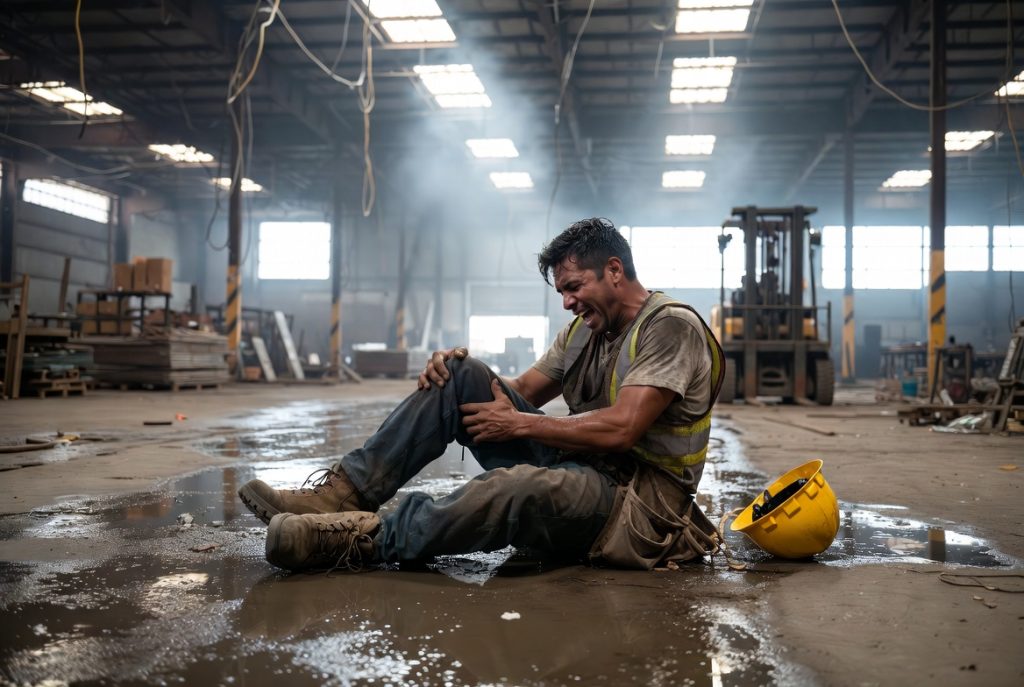
If you’ve been hurt while working on someone else’s property in California, you’re probably dealing with a lot right now—medical bills piling up, time away from work, and uncertainty about who’s responsible. At Laguna Law Firm, we help injured workers every day navigate these complex situations. Whether it’s a slip and fall at a client’s warehouse, a trip over uneven flooring on a construction site, or an injury caused by unsafe conditions at a commercial property, understanding premises liability can make all the difference in getting the full compensation you deserve.
This guide breaks it down in plain English. We’ll walk through California premises liability laws, how they intersect with workers’ compensation, and practical steps you can take. Our goal? To empower you with knowledge while showing how an experienced workers’ compensation attorney can fight for every benefit available.
What Is Premises Liability in California?
Premises liability is the legal principle that holds property owners, occupiers, or managers responsible for injuries caused by unsafe conditions on their property. In California, it stems primarily from Civil Code Section 1714, which requires property owners to exercise “ordinary care” in managing their premises to prevent harm to others.
Think of it this way: If you’re lawfully on someone else’s land or building and get hurt because of a hazard they should have fixed or warned you about, they could be liable. This applies to homes, businesses, construction sites, retail stores, apartment complexes, and more.
For injured workers, premises liability often comes into play when your job takes you onto third-party property. You might be a delivery driver, construction worker, maintenance technician, or service professional injured at a client’s location. Workers’ comp covers benefits from your employer, but premises liability can open the door to additional compensation from the property owner for things like pain and suffering that workers’ comp doesn’t fully address.
Key Elements to Prove Liability in a California Premises Liability Case
To hold someone liable, you generally need to show four things:
- The defendant owned, leased, occupied, or controlled the property.
- There was a dangerous condition on the property.
- The property owner knew or should have known about the hazard (actual or constructive notice).
- Their failure to fix it, warn about it, or protect visitors caused your injury.
California courts look at what a reasonable property owner would have done. Regular inspections, timely repairs, and clear warnings are expected. Failure in any of these areas can lead to liability.
Long-tail search example: Many people Google “who is liable for slip and fall on commercial property California” or “can I sue for injury at work on client site.” The answer is often yes—through a third-party claim alongside your workers’ comp case.
Different Types of Visitors and Levels of Duty Owed
California law classifies people on the property differently, which affects the duty of care:
- Invitees (highest duty): Business visitors, customers, or workers invited onto the property for mutual benefit. Property owners must inspect for hazards and fix or warn about them. Most injured workers fall into this category.
- Licensees: Social guests or those with permission but not for business. Owners must warn of known hazards but don’t have to inspect as rigorously.
- Trespassers (lowest duty): Generally, owners only owe a duty to avoid willful harm, though there are exceptions for attractive nuisances like unfenced pools.
For workers, you’re almost always an invitee when performing job duties.
Common Scenarios for Injured Workers on Someone Else’s Property
Slip and Fall Accidents: Wet floors without signs, spilled liquids in stores or warehouses, or icy walkways. These are some of the most common “premises liability slip and fall worker injury” cases we see.
Construction Site Injuries: Falling scaffolding, unguarded holes, faulty equipment, or poor housekeeping. Property owners and general contractors can share liability even if your direct employer is the subcontractor.
Trip and Fall Hazards: Uneven sidewalks, loose carpeting, cords across walkways, or poorly lit areas.
Inadequate Security: Assaults or robberies due to broken locks, poor lighting, or lack of surveillance—especially relevant for night-shift workers or delivery personnel.
Elevator or Escalator Malfunctions: Common in office buildings or malls.
Dog Bites or Animal Attacks: On residential or farm properties you visit for work.
In each case, the question is: Did the property owner act reasonably?
How Workers’ Compensation Interacts with Premises Liability Claims
Here’s where it gets strategic for injured workers. California’s workers’ compensation system is “no-fault,” meaning you get medical care, temporary disability benefits, and possibly permanent disability payments regardless of who’s at fault. But it has limits—no pain and suffering, and benefits may not fully cover lost wages or future needs.
That’s why third-party premises liability claims are so important. You can pursue your employer’s workers’ comp benefits and sue the property owner (or other negligent parties) for additional damages. Your employer’s insurer may even have a lien on your third-party recovery, but a skilled attorney negotiates to maximize what you keep in your pocket.
Real-world example: A roofer slips on debris left by another contractor at a homeowner’s property. Workers’ comp pays medical bills and some wage replacement. A premises liability claim against the property owner or general contractor can recover extra for pain, reduced earning capacity, and more.
Comparative Negligence in California: You Could Still Recover
California follows a pure comparative negligence rule. If you’re found partially at fault (say, 20% for not watching your step), your award is reduced by that percentage—but you can still recover 80%. Property owners sometimes try to shift blame, which is why strong evidence and legal representation matter.
Statute of Limitations: Don’t Wait
For personal injury/premises liability claims in California, you generally have two years from the date of injury to file a lawsuit. Workers’ comp claims have their own deadlines (often 1 year from injury or date you knew it was work-related). Missing these can bar your recovery entirely. Contact an attorney right away.
What to Do Immediately After an Injury on Someone Else’s Property
- Seek medical attention — Document everything.
- Report the incident to your employer and the property owner/manager. Get it in writing.
- Gather evidence — Photos of the hazard, witness contacts, video footage, maintenance records.
- Avoid giving statements to insurance companies without legal advice.
- Contact a workers’ compensation lawyer who understands third-party claims.
At Laguna Law Firm, we investigate quickly—preserving critical evidence before it disappears.
Damages Available in Premises Liability Cases for Workers
- Medical expenses (past and future)
- Lost wages and loss of earning capacity
- Pain and suffering
- Emotional distress
- Property damage (if applicable)
- Rehabilitation costs
Workers’ comp handles the basics; premises liability fills the gaps for a more complete recovery.
Why Choose Laguna Law Firm for Your Case?
We’re not a general personal injury firm. Laguna Law Firm specializes in workers’ compensation across California, with deep experience handling cases involving premises liability overlaps. Based in Anaheim and serving clients statewide, our team knows how to coordinate workers’ comp and third-party claims to avoid conflicts and maximize results.
We work on a contingency basis—you pay nothing upfront. Our approach is straightforward, compassionate, and aggressive when needed. We’ve helped countless injured workers in Orange County, Los Angeles, Inland Empire, and beyond get back on their feet.
Frequently Asked Questions
Can I sue for injury on someone else’s property if I was working?
Yes. Workers’ comp doesn’t prevent third-party lawsuits against negligent property owners.
What if the property owner blames my employer?
We sort out the liabilities. Often multiple parties share responsibility.
How much is my case worth?
It depends on injury severity, medical costs, lost income, and liability strength. We provide honest evaluations during free consultations.
Do I need a lawyer for a simple slip and fall at work?
Insurance companies fight hard. Having an attorney levels the playing field, especially for long-term injuries.
Protecting Injured Workers: More Than Just a Case
Injuries on someone else’s property disrupt lives. You deserve full support—not just a quick settlement. Whether you’re searching for “workers compensation lawyer for premises liability injury California,” “slip and fall at work third party claim,” or “construction site injury attorney Orange County,” know that help is available.
At Laguna Law Firm, we treat every client like family. We listen, explain options clearly, and fight tirelessly.
Ready to take the next step? Call us today at (949) 930-1386 or visit lagunalawfirm.com for a free, no-obligation consultation. Don’t let uncertainty or insurance pushback hold you back from the recovery you deserve. We’re here to help you move forward.