
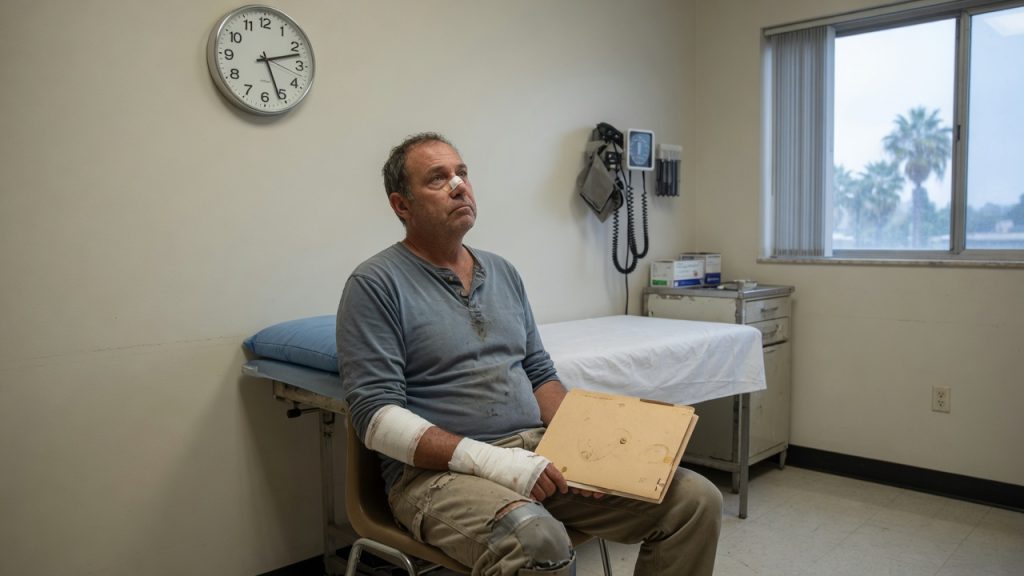
Yes, you should go. A QME exam is the medical-legal evaluation California uses when you and the insurance company disagree about a work injury. QME means Qualified Medical Evaluator, a doctor certified by the state to write a report for the case, not to become your everyday treating doctor. The report often drives causation, work restrictions, and the permanent disability rating. Skipping it does not make the dispute go away. It usually hands the schedule, and sometimes the choice of doctor, to the other side.
If a letter showed up with three doctor names and a deadline measured in days, you are in the right pile of mail. This is not a routine physical. It is one of the steps that decides what the claim is worth.
Laguna Law Firm has spent more than 20 years walking injured workers through QME panels, exams, and the reports that come back wrong. Call (949) 930-1386 or visit lagunalawfirm.com. The consultation is free.
The short version
Your treating doctor handles care. A QME handles a fight about the medicine. The fight might be whether the injury is work-related, how disabled you are, whether an old problem is part of the rating, or whether you can go back to the job.
The state issues a panel, usually three names in a specialty. What you do with that list depends on whether you have a lawyer.
If you do not have a lawyer, Labor Code section 4062.1 generally gives you 10 days from the assignment to pick one doctor from the three, make the appointment, and tell the claims administrator. If you do not, the claims administrator can pick the doctor and set the time.
If you have a lawyer, Labor Code section 4062.2 generally gives each side 10 days from assignment to strike one name. The doctor left standing is the QME. If one side misses the strike, the other side may select any doctor who remains. After the doctor is chosen, the injured worker is supposed to arrange the appointment and tell the employer within 10 days. If that does not happen, the employer may arrange it.
Those clocks are short on purpose. A panel that sits on the kitchen counter for two weeks is how people lose the only choice they had.
QME, treating doctor, AME: three different jobs
People mix these up because every one of them has a white coat.
Treating doctor. This is the physician directing your care inside the Medical Provider Network, or your predesignated doctor if you set that up correctly before the injury. They write treatment requests, work status, and progress notes. If that relationship is a mess, the path is different from a QME fight. We wrote that up in what to do when the workers’ comp doctor will not help.
QME. A state-certified evaluator who examines you once, reviews records, and writes a medical-legal report. You do not switch your treatment to this person just because they examined you. Their job is the dispute.
AME, Agreed Medical Evaluator. When you have a lawyer, the two sides can agree on one doctor instead of using the panel. An AME report carries a lot of weight. Agreeing to the wrong doctor because someone said “it will be faster” is a real way to lose a case quietly. That decision belongs in a conversation with your lawyer, not in a hallway with the adjuster.
A broader look at exams in the system is in the role of medical evaluations. This page stays on the QME panel, because that is the letter people panic about.
When a QME actually gets requested
Not every claim needs one. A clean accepted injury with treatment moving and a rating nobody fights can finish without a panel.
A panel shows up when there is a real medical dispute. Common ones:
- The carrier says the injury is not work-related, or only part of it is
- Your doctor and the defense disagree about work restrictions
- Permanent disability is in dispute under Labor Code sections 4061 or 4062
- Someone wants apportionment to an old injury, arthritis, or a prior claim
- The file needs a specialty your treating doctor does not cover, such as psych, neurology, or pain
There is a waiting period before a represented worker’s side can request the panel. Under section 4062.2, the request generally cannot go in until the first working day that is at least 10 days after a mailed objection or a request for evaluation. That gap exists so the lawyers can try to agree on an AME first. If you are unrepresented, do not try to run that strategy from a blog. Call someone before you mail a stack of objections you do not need.
The 10-day problem, in plain English
The number 10 is the one people remember, and the one people miss.
Unrepresented workers. You select. You do not “strike” in the lawyer sense. You pick one of the three, you call that office, and you tell the claims administrator you did it. Do it in writing. If the 10 days pass in silence, the claims administrator can choose for you and put a date on the calendar that you did not pick.
Represented workers. Each side removes one name. The remaining doctor is the evaluator. The statute says this happens within 10 days of assignment by the administrative director. When the panel is served by mail, the Workers’ Compensation Appeals Board’s en banc decision in Messele v. Pitco Foods adds mailbox time, often discussed as five extra days. Do not invent your own last day from a memory of that case. Your lawyer should calendar it the day the panel exists. A late strike can let the other side choose any doctor still on the list.
Strikes can be communicated without a formal court filing. A 2025 WCAB panel decision, Ramos v. Aqua Construction, treated a timely notice, including email, as enough to exercise the strike. “Timely” is still the word that matters. A perfect email on day 16 is a late email.
After the doctor is picked. Section 4062.2(d) puts the first scheduling duty on the represented worker. Tell the employer about the appointment within 10 days of selection. If you do not, the defense can set it. The appointment is supposed to land inside the regulatory window, often no later than about 90 days, with room in the rules to agree on a later date if the office is booked. If they cannot see you in time, say so early. Silence looks like avoidance. A phone call looks like a scheduling problem.
What the exam is actually like
Most QME visits are an interview, a record review, and a physical exam. You will answer how you got hurt, what you cannot do now, what treatment you have had, and what your job required on a normal day. The doctor may measure motion, test strength, and look at imaging. Some specialties add psychological testing. You might be there for less than an hour, or you might be there much longer. The report can still run many pages, because the doctor is writing for a legal file, not for your kitchen table.
Bring a list of every body part, a short timeline, your medication list, a plain description of a normal shift, and photo ID.
Leave the performance at home. Do not exaggerate pain you do not have, and do not jog the hall to prove you are tough if you cannot jog on a Tuesday. The doctor is comparing what you say, what you do in the room, what the records say, and sometimes what a video says. Tell the truth about good days and bad days. A good day is not a cure.
Read the intake form slowly. If a question does not match your injury, say so. “I do not know” is a better sentence than a guess that lands in the report as a fact.
The report is the point
The case changes when the report is served. A QME report can address:
- Whether the injury arose out of the job
- Temporary disability and work status
- Permanent impairment under the rating schedule
- Apportionment to other causes
- Future medical care
- Whether you can return to your usual job
A rating that ignores your real job duties, or apportions half the disability to “age” with no real analysis, is worth fighting. So is a report that never mentions the body part you have been treating for a year. Deadlines to object are real. Do not put the report in a drawer for a month.
If the carrier’s copy of the records was thin, the report will be thin. Treating notes, imaging, and a wage statement that reflects actual earnings belong in the packet the doctor sees. That is one reason people hire a lawyer before the exam, not after the bad report arrives.
Do you have to go?
You have to participate if you want the dispute decided on your facts. A no-show can be used to argue you are blocking the case. The defense can ask a judge for orders. Your benefits can stall while everyone argues about the missed chair instead of the injury.
If you are sick, if the office is three hours away and you have no ride, or if the date conflicts with a surgery you already have, call the doctor’s office and the claims administrator the same day. Ask for a new date in writing. Document the call. Rescheduling for a real reason is different from disappearing.
If the specialty on the panel is wrong for the injury, that is a legal objection, not a reason to ghost the appointment. A spine case sent to a generalist, or a hand injury sent to a doctor who does not do hands, needs to be raised on time. Bring that letter to a lawyer before the 10 days run.
How Laguna Law Firm handles a QME
We are a California workers’ compensation firm. QME strategy is ordinary Tuesday work, not a special product.
What that looks like:
- We read the panel before anyone strikes a name
- We look at specialty, location, and how that doctor writes reports
- We get the records to the evaluator so the file is not only the carrier’s stack
- We prep you for the exam without scripting you
- We read the report against the job you actually did
- We object, depose, or seek a supplemental report when the medicine is wrong
- We use a solid report to push treatment, temporary disability, and a rating that matches the injury
A California workers’ compensation attorney is typically paid on a contingency fee set by the Workers’ Compensation Appeals Board. You do not write a big retainer check to get started. If there is no recovery, the attorney fee generally is not owed. We will explain the fee in plain English on the first call.
Call (949) 930-1386. Or go to lagunalawfirm.com and send a note. If the panel is already in your hand, do not wait until the week it expires. Virtual consults are available.
Frequently asked questions
Is a QME the same as an IME?
People use “IME” for a defense medical exam in other kinds of cases. In California workers’ compensation, the formal medical-legal exam in a dispute is usually a QME or an AME. If a letter uses both words, read who is asking and whether it is a state panel.
Can I refuse a QME and keep treating?
Treatment and the QME are different tracks. You can keep treating while a panel is pending. Refusing the exam does not protect the treating doctor’s opinion if the dispute has to be resolved by a medical-legal report.
The doctor was rude. Does that throw out the report?
Rudeness alone rarely does. A report that skips body parts, ignores records, or gets the job wrong is a better fight. Write down what happened while it is fresh, including the time you arrived and how long the exam lasted.
What if I move or the office is too far?
Distance can matter, and the rules on location are specific. Raise it when the panel arrives, not the morning of the exam.
Will the QME decide my settlement?
The doctor does not write the check. The report supplies the medical facts the settlement, the rating, and a judge will use. A low report makes a low offer feel reasonable. A careful report changes that conversation.
Bottom line
A QME exam is the state’s way of getting a medical opinion when the claim is stuck on a medical fight. Unrepresented workers pick from three names. Represented workers strike. Both versions run on a clock of about 10 days, with extra mail time that lawyers track and injured workers should not guess at. You should go, you should tell the truth, and you should get advice before the panel expires if you can.
The hard part is not sitting on the exam table. The hard part is the strike, the records, and the report that shows up six weeks later with a number that does not match your life. That is the part we handle.
Laguna Law Firm
Phone: (949) 930-1386
Web: lagunalawfirm.com